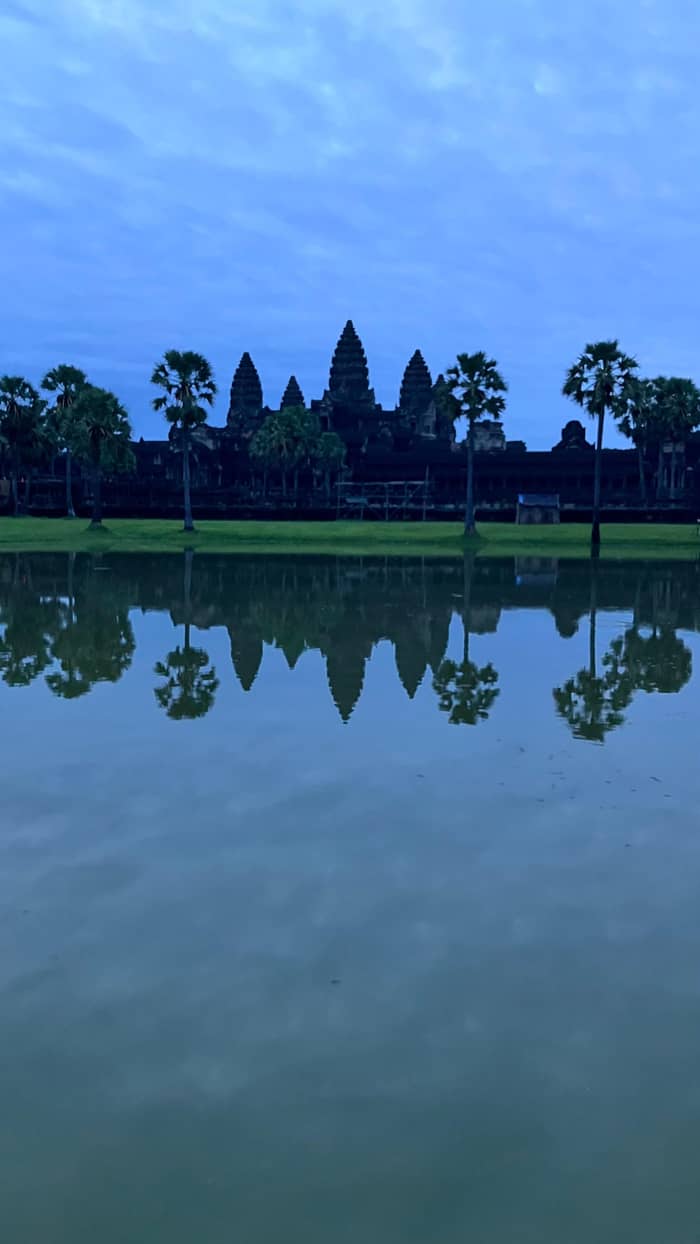
Small group
Small-group day
The tour sold here
- Time at the temple3 hours
- Group sizeUp to 15
- Pricefrom $15
Guides
Language
Currency
See what is open$15 and up · free cancelLocate your stop
Map of 11 stops
First pick a route, then tap any pin or stop for details and Google Maps.
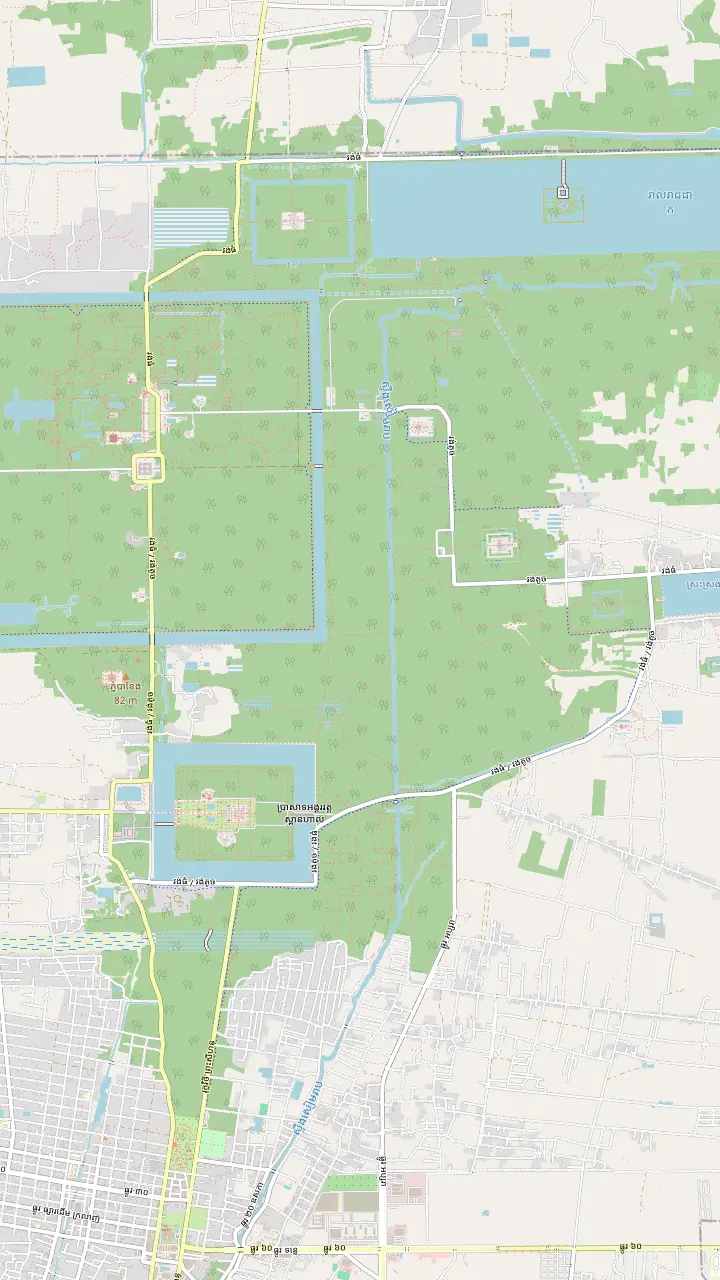
Angkor Wat lists opening from 5:00 am to 5:30 pm.
Google MapsThe Bayon is the temple of the smiling stone faces in Angkor Thom.
Google MapsPhnom Bakheng is the hill that Angkor Enterprise names as a popular sunset spot, and it lists opening until 7:00 pm.
Google MapsTa Prohm is the jungle temple that the small-group tour visits after Angkor Wat.
Google MapsBanteay Kdei is the stop the small-group tour makes after Ta Prohm.
Google Maps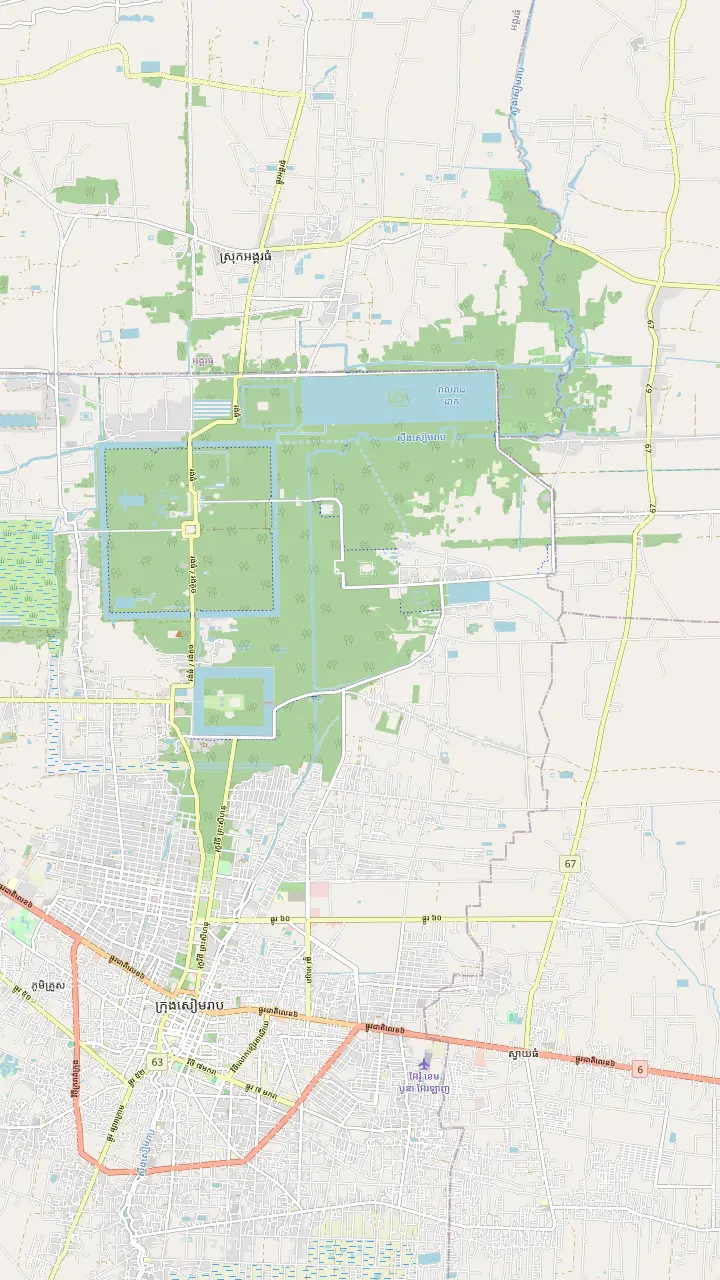
Angkor Wat lists opening from 5:00 am to 5:30 pm.
Google MapsPhnom Bakheng is the hill that Angkor Enterprise names as a popular sunset spot, and it lists opening until 7:00 pm.
Google MapsPre Rup is the temple APSARA says is best visited at sunset, when the rice fields around it are lit.
Google MapsSras Srang is the royal bath that APSARA calls especially serene in the early light of day.
Google MapsThe ticket office is where the pass is bought before any of these stops.
Google Maps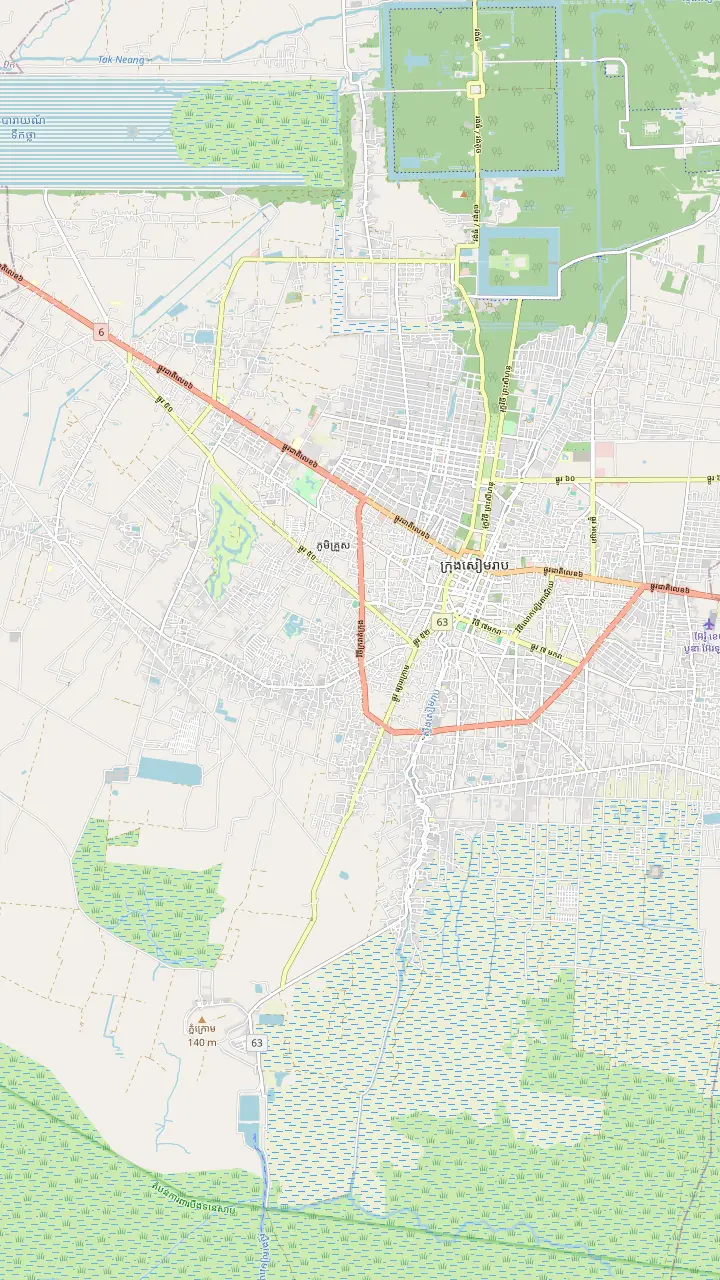
Siem Reap Old Market marks the town centre, about 12 km from Phnom Krom by the distance APSARA gives for the city.
Google MapsAngkor Wat lists opening from 5:00 am to 5:30 pm.
Google MapsPhnom Krom looks west over the Tonle Sap lake at sunset, which APSARA says differs from the Angkor Wat and Phnom Bakheng views.
Google Maps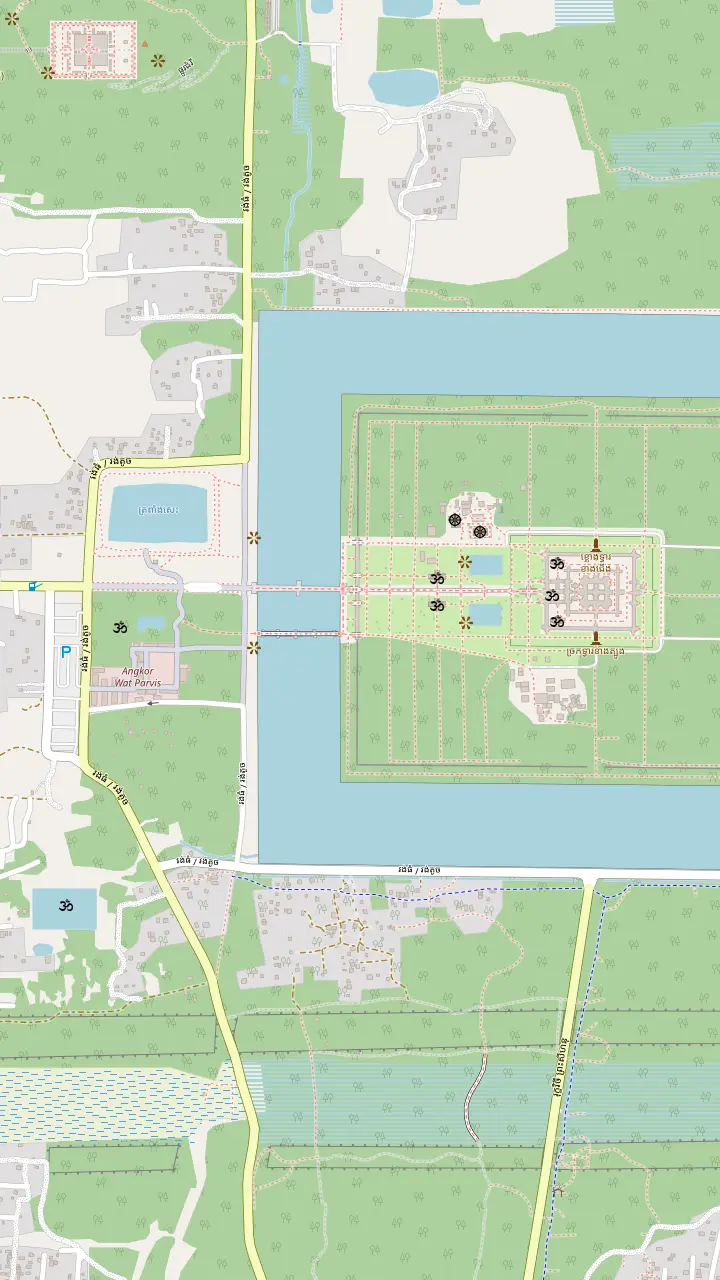
The ticket office is where the pass is bought before any of these stops.
Google MapsKuk Ta Reach is the traditional name of the porticos in the colonnade that leads into Angkor Wat.
Google MapsAngkor Wat lists opening from 5:00 am to 5:30 pm.
Google Maps© OpenStreetMap contributors, map data
A plain-words description of Angkor Wat, from the moat and the west causeway to the carved galleries and the central towers, with the figures from the official sources and a map.
Editorial team, angkorsunsettour.click · Updated November 23, 2026 · 8 mins to read
Essentials
In plain words, here is the Angkor Wat summary: a state temple built for a king and dedicated to a god. APSARA, the national authority that runs the Angkor park, says it was built between 1113 and 1150 by Suryavarman II as his state temple and capital city, and that it was originally dedicated to Vishnu.1,2 In the words of Angkor Enterprise, the official pass seller, it is the world's largest religious monument, occupying 162.6 hectares.5
Any Angkor Wat description starts with scale. APSARA gives a rectangle of about 1,500 by 1,300 metres including its moats, which are 190 metres wide, covering nearly 200 hectares.9 The external enclosure wall inside the moat defines an expanse of 1,025 metres by 800, or 82 hectares.10 The construction is thought to have taken some 30 years of intensive labor.11 APSARA also calls it the largest monument of the Angkor group.12
The temple did not stay the monument of a single religion. APSARA says that from the 16th century Buddhist pilgrims made it a major destination,2 and that its name then was Preah Pisnulok, the founder's posthumous name.13 Angkor Enterprise adds that, as the best-preserved temple, it alone has stayed a significant religious centre since the day it was founded.14 Angkor Enterprise dates the construction to the early 12th century.15
The temple by parts
| Part | What it is | What the sources give |
|---|---|---|
| Moat | The water ring around the enclosure | 190 metres wide, with 2 crossings9,17 |
| West causeway | The sandstone approach | 200 metres long and 12 metres wide17 |
| Kuk Ta Reach | The gate colonnade | A colonnade of 235 metres18 |
| Bas-reliefs | The carved gallery walls | More than 1,000 square metres6 |
| Preah Poan | The cross-shaped gallery | 41 Middle Period inscriptions21 |
| Bakan | The central sanctuary level | Open 7:40 am to 5:00 pm7 |
Figures are the ones APSARA publishes; Angkor Enterprise gives the outer wall as 3.6 kilometres long.3
The usual question is what Angkor Wat represents, and the official answer starts in Hindu mythology. Angkor Enterprise says the temple is designed to represent Mount Meru, home of the devas: a moat and an outer wall 3.6 kilometres long enclose rectangular galleries, each raised above the next.3 At the center stands a quincunx of towers, the group that gives the skyline its famous outline.22
APSARA adds the view from the throne. Built in the early 12th century in the reign of Suryavarman II,15 the temple was the residence of Vishnu, and also the divine palace in which the king himself was to reside after death.23 Put briefly, it has a double reading: a model of a sacred mountain, and a monument made for a ruler who meant to be remembered there. Angkor Enterprise places the temple at the top of the high classical style of Khmer architecture, as a combination of the temple-mountain and the later galleried temple.24,25
For Cambodians the temple means more than architecture. APSARA says it symbolizes the soul of the Khmer people and the lasting grandeur of their past,26 and Angkor Enterprise notes that it appears on the national flag.4 APSARA also records that the name means Buddhist Monastery in the city, a reminder of the centuries in which the temple served Buddhist worshippers.27 The Khmer tradition behind it is the royal Temple-Mountain, where APSARA says Angkor Wat has a unique place.28
The approach is part of the design. APSARA says the moats around the external enclosure are crossed at only 2 places: to the east by a simple bank of earth, and to the west by a sandstone-paved causeway 200 metres long and 12 metres wide.17 The western causeway is the paved way in, and the map on this page traces it from the ticket office. The moats are bordered by steps with a moulded sandstone perimeter.32
At the head of the causeway a cruciform terrace decorated with lions, bordered by naga balustrades, precedes the crossing.33 Beyond it the temple enclosure is formed by a high laterite wall with a colonnade of 235 metres and a gopura.18 Those porticos carry the traditional name Kuk Ta Reach, the Sanctuary of the Royal Ancestor.19 The galleries of the colonnade link with 2 pavilions at either end that served as passageways for elephants.34
A small story belongs to that gate. APSARA says that in 2003 the cement replica head of the Ta Reach statue was replaced by the original, which had been stored for safekeeping at the National Museum of Cambodia.35 It is a useful reminder that the temple is a living shrine as well as a monument, and it is a reason to slow down at the gate.
Where to look
Name what interests you and the matching part follows.
If I want the story carved in stone
The bas-reliefs
More than 1,000 square metres of reliefs cover the gallery walls.6
If I want to know what it means
Mount Meru
The temple is designed to represent the home of the devas.3
If I want a famous scene
The Churning
The eastern gallery shows the Churning of the Sea of Milk.29
If I want the Buddhist chapter
Preah Poan and Bakan
Inscriptions and Buddha reliefs date from the Middle Period.21,30
If I travel with a child under 12
Stay below the top
Children under 12 may not go up to the top.31
Seeing it with a guide
Small group
The tour sold here
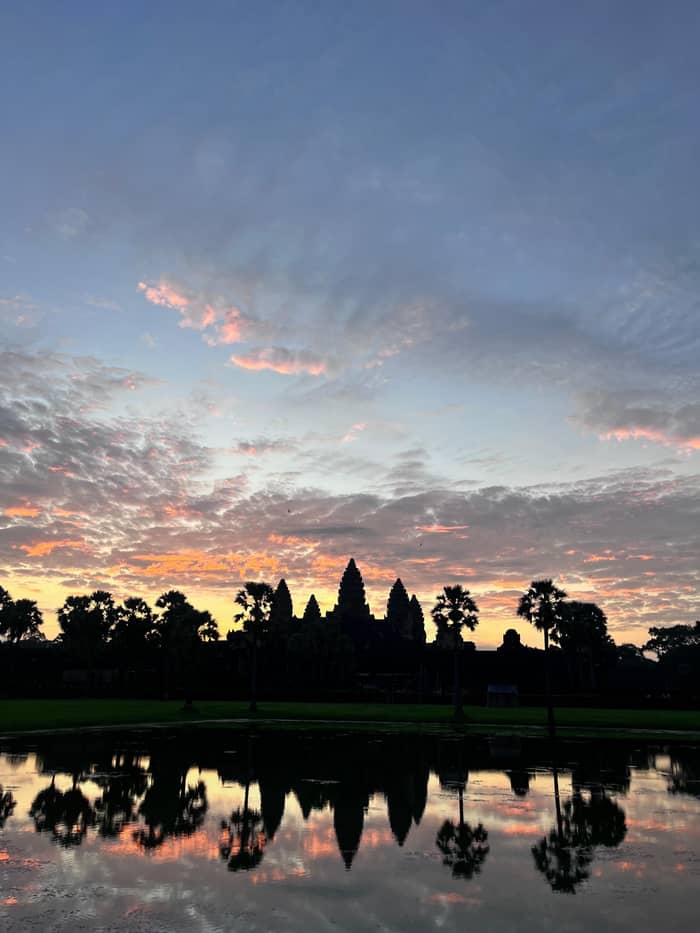
Full day
With a sunset on the hill
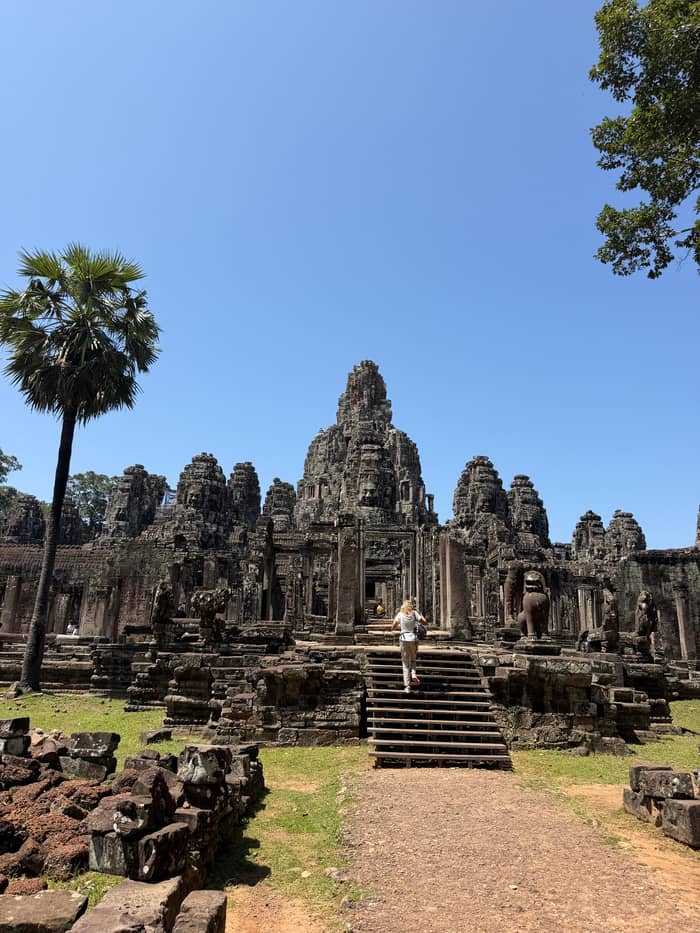
Private
Self-guided inside
The carved walls are the part of the temple that rewards a guide. APSARA says the bas-reliefs cover the inner walls of the galleries of the lower enclosure, with a total area of more than 1,000 square metres, excluding the corner pavilions.6 On the southern gallery the western section commemorates historical events from the reign of King Suryavarman II.48 APSARA describes the carvings as representing legendary and historic scenes for the enlightenment of the faithful.49
The epics fill the other walls. The reliefs on the eastern section of the southern gallery show the 37 Heavens and 32 Hells derived from Indian tradition.46 The southern section of the eastern gallery shows the Churning of the Sea of Milk, a popular episode from Vishnu lore.29 On the western gallery the Battle of Kurukshetra and the Battle of Lanka are told in stone.50,51 APSARA notes that the Mahabharata is virtually unknown in modern Cambodia, unlike the Ramayana, which continues to permeate all aspects of Khmer culture.52
Read them in the right direction. Because the temple faces west, APSARA says its bas-reliefs are to be viewed in an anti-clockwise direction.53,45 Only the northeastern corner was left bare when the galleries were first carved, and it was sculpted in the 16th century, with reliefs that APSARA calls notably inferior in quality to the earlier work.47 Angkor Enterprise adds the numerous devatas that adorn the walls.54
Compare the guides
Fill in the party size and compare the guided days that include Angkor Wat.
Compare all 3 options
Fill in the party size and compare the guided days that include Angkor Wat.
≈
View≈
View≈
ViewFrom-prices on GetYourGuide, shown at the ECB reference rate. Your exact price is confirmed during booking.
The approach
Before the moat
The 1 day pass costs $37 and comes before the moat.16
The causeway
A sandstone causeway 200 metres long and 12 metres wide crosses it on the west.17
The gate
The galleries
Bas-reliefs cover more than 1,000 square metres.6
The cross
The gallery of Buddha statues holds most of the 41 inscriptions.20,21
The summit
The central level is open 7:40 am to 5:00 pm.7
The cruciform gallery called Preah Poan carries its name from the Middle Period, when the faithful placed a great number of Buddha statues there.20 It also holds most of the temple's 41 inscriptions from that period, found on the pillars of that gallery.21 Some of the statues still remain while others are exhibited or kept in conservation storehouses.55
At the top, the central sanctuary was a different building in the beginning. APSARA says the principal sanctuary of the uppermost terrace was open to the cardinal points and probably sheltered a statue of Vishnu.56 When Angkor Wat became a Buddhist pilgrimage centre, the entranceways were filled in with sandstone blocks, each sculpted with a deep relief of the standing Buddha, which turned an open shrine into a closed one.30
In 1908 archaeologists opened the southern entranceway and found broken statues, pedestals and a sarcophagus.57 Further research in the well of the central sanctuary revealed, at a depth of 23 meters, the original foundation deposits: circular gold leaves embedded in a laterite block.58 Visitors should know the rules for the top: Bakan is open 7:40 am to 5:00 pm and shut on Holy days, and children under 12 and pregnant women may not climb the pyramid.7,31
Video
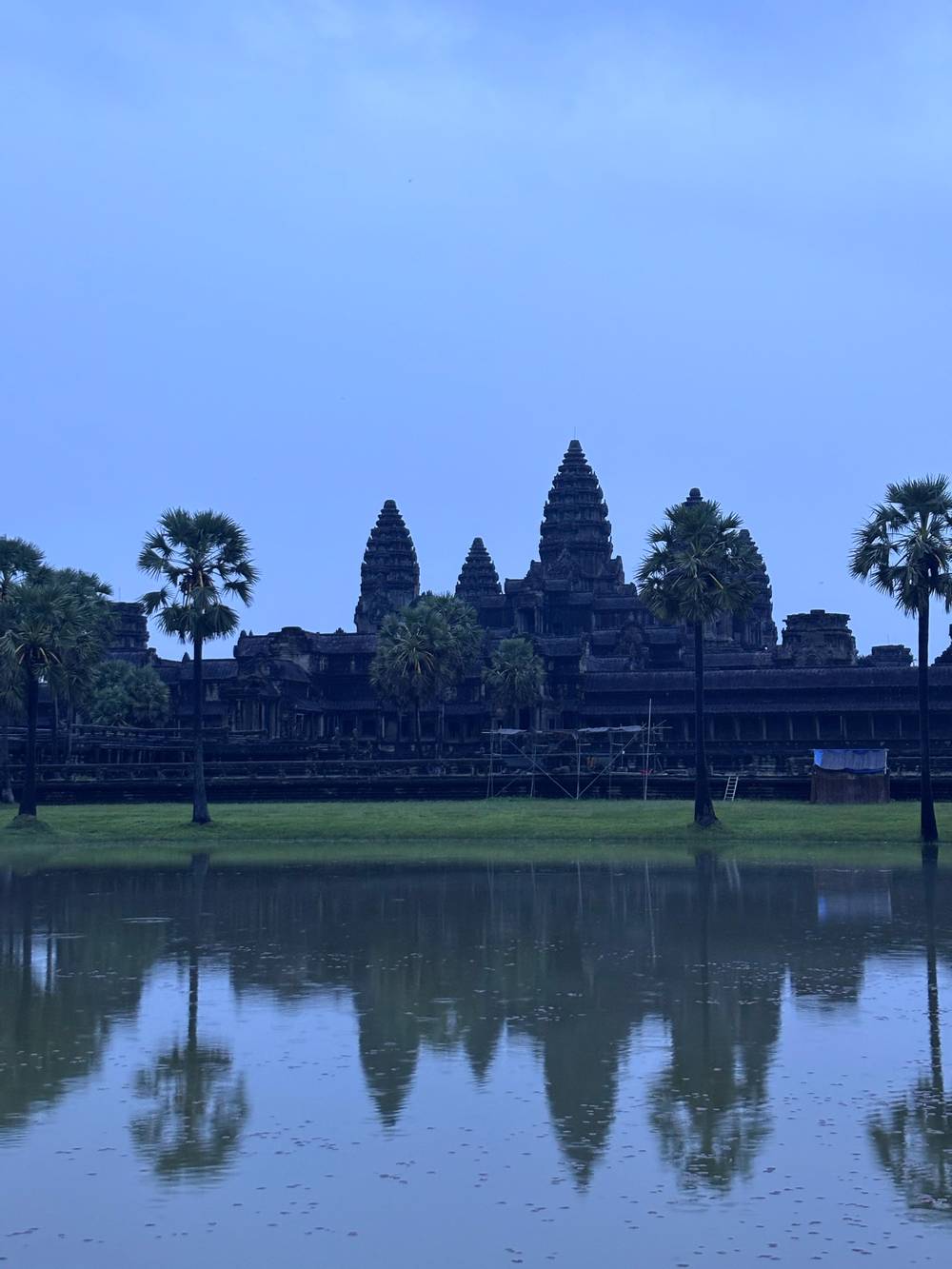
National Geographic on YouTube · Tap play to load the video; not before.
The temple symbolizes the soul of the Khmer people, and the lasting grandeur of their past.
On the walk
Angkor Wat is the most famous part of a much larger site. UNESCO says Angkor extends over approximately 400 square kilometres and consists of scores of temples, hydraulic structures and communication routes.59 It lists the inscription of Angkor in 1992, a date APSARA also gives for the classing of Angkor Wat and the other monuments as World Heritage.60,61 Angkor Wat lies in the southeast corner of the ancient city of Yashodhara, which Yashovarman I built around Phnom Bakheng.62
Among the neighbours, UNESCO counts Angkor Wat, the Bayon and Banteay Srei as masterpieces of the park.63 The Bayon is known for the serene and smiling stone faces on its towers,43 and Phnom Bakheng, a hill with sunset views, lies about 1.5 km away.36 The map on this page places them around Angkor Wat, with Ta Prohm and Banteay Kdei to the east. Together they give a sense of how many centuries and styles the park holds.
The park is inhabited. UNESCO counts more than 100,000 inhabitants in 112 historic settlements,64 and it credits the conservation work of APSARA with the park's departure from the danger list in 2004.65 That context frames the rules about touching, climbing and dress that the visitor code sets out. APSARA has been responsible for the conservation and sustainable development of Angkor since 1995.66
The grounds open at 5:00 am and close at 5:30 pm, and a visit usually takes 2 to 3 hours.7,8 The temple page bans hats and asks for decent clothes,44 and the pass is bought separately, at $37 for 1 day.16 A full guide to clothes and conduct has its own page on this site. Allow extra minutes for the walk in from the causeway, since the site is large. Bakan, the highest level, keeps shorter hours than the rest of the temple, so climb early if the top is on your list.7
A guide changes what you notice. The day that this site books, a small-group tour, includes 3 hours at Angkor Wat within an 8 to 9 hour program, from $15, and the full-day guided tour with sunset gives it 2.5 hours. A private tuk-tuk day gives it 2 hours and leaves the temple self-guided inside. The first two come with a live guide in English, and the pass is a separate purchase that costs $37 for a day.
Sunset adds a limit, because the closing time of the temple and the sunset can fall within minutes of each other.7,67 If the evening light is the reason you came, put the temple in the afternoon and take the golden hour on a hill, a choice that a separate page of this site compares. Whatever you pick, check the closing time with your guide on the day, and leave time for the way down from the highest level before the 5:30 PM closing.7
FAQ
APSARA says it was built between 1113 and 1150 by Suryavarman II as his state temple and capital city.1
It was dedicated to Vishnu and from the 16th century became a Buddhist pilgrimage site.2
APSARA keeps children under 12 and pregnant women off the top of the pyramid, for safety.31
Sources
Planning a dawn or dusk at the towers? Ask a real person here.